

Preparing Students for an AI Workplace Requires Clear Classroom Rules
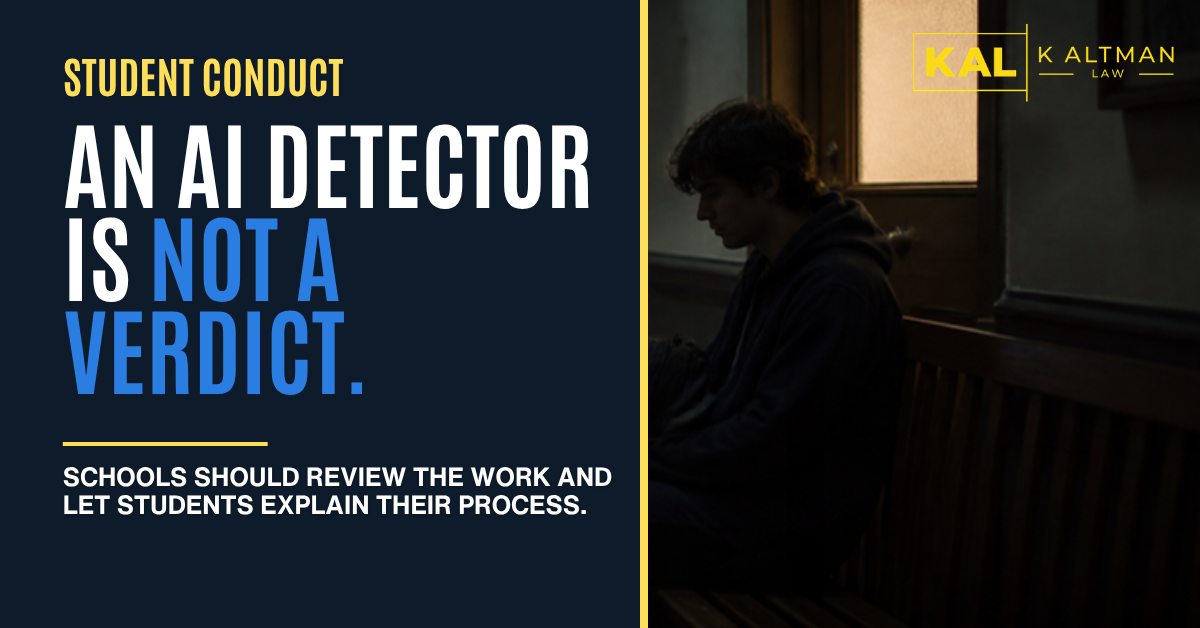
An AI detector is not a verdict.

Keith Altman
K Altman Law urges colleges to define permitted AI use and provide fair review of misconduct allegations
Schools should explain the boundaries before an assignment is submitted and review the evidence carefully before imposing a penalty.”
NEW YORK, NY, UNITED STATES, October 27, 2026 /EINPresswire.com/ -- K Altman Law is calling for clear, assignment-specific artificial intelligence rules as colleges prepare students for AI-enabled workplaces. Students should know which uses are permitted, what must be disclosed and what work they must complete independently.— Keith Altman
The recommendation follows a newly shared LinkedIn post in which Scott Galloway highlights AI’s disruption of teaching. The post links to his October 22 conversation with Wharton professor Ethan Mollick about AI, learning and the future of internships. You can read about it here.
“Students need to learn to use AI responsibly while doing their own work,” said Keith Altman, Founder and Managing Partner of K Altman Law. “Schools should explain the boundaries before an assignment is submitted and review the evidence carefully before imposing a penalty.”
Clear rules and careful review:
Permission to use AI for brainstorming, editing or tutoring does not automatically authorize AI-generated submissions. The applicable course and assignment rules matter.
University of Washington guidance recommends expectations in syllabi and assignments. Columbia Law School’s current policy combines independent reasoning with career AI fluency and advance written notice of alternative course rules.
Turnitin acknowledges that its AI-writing detector can misidentify text and says it should not independently justify adverse action against a student.
K Altman Law recommends that schools specify permitted uses and disclosure requirements, review the underlying work and applicable rules, and give students a meaningful opportunity to explain their process before deciding an allegation. Schools should also explain how students can ask questions before a deadline, who reviews misconduct concerns and what review or appeal procedures are available.
What students and families should do now:
• Check each assignment. Do not assume permission in one class applies in another. Ask for written clarification before using a tool.
• Keep your work. Preserve assignment instructions, drafts, notes, version history and records of any AI use.
• Follow disclosure rules. Identify permitted assistance as required, verify sources and remain responsible for submitted work.
• Take allegations seriously. Read the notice and procedures, preserve relevant records, meet response deadlines and seek qualified guidance when needed.
About K Altman Law:
K Altman Law is a law firm focused on student conduct, Title IX, special education and civil rights matters. www.kaltmanlaw.com
General information only, not legal advice. Outcomes vary. Rules differ by jurisdiction and institution.
Keith Altman
K Altman Law
+1 888-984-1341
kalonline@kaltmanlaw.com
Visit us on social media:
LinkedIn
Instagram
Facebook
YouTube
TikTok
X
Legal Disclaimer:
EIN Presswire provides this news content "as is" without warranty of any kind. We do not accept any responsibility or liability for the accuracy, content, images, videos, licenses, completeness, legality, or reliability of the information contained in this article. If you have any complaints or copyright issues related to this article, kindly contact the author above.
